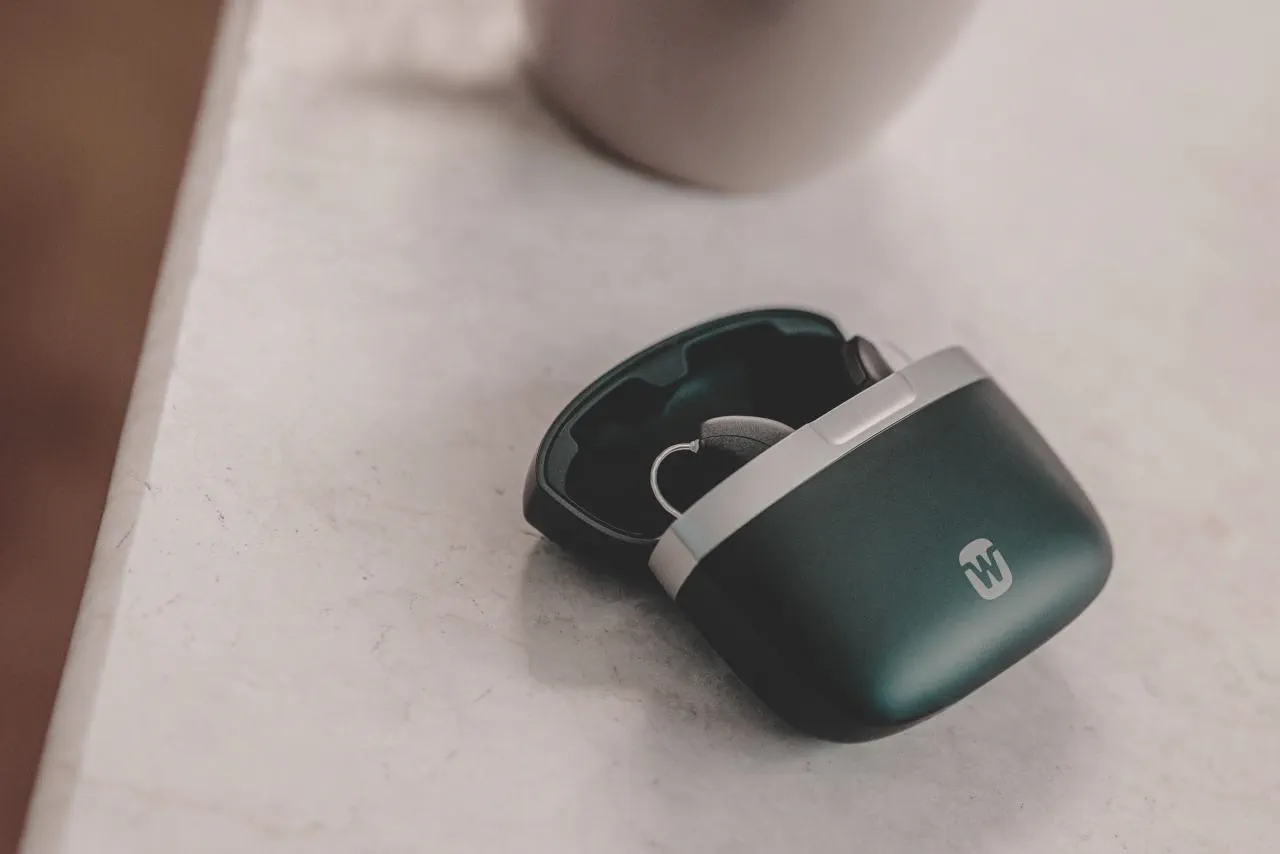
Lightweight design
Choose a colour that matches your hair or skin or go bold and choose your favorite colour.
Pros of AI hearing aids
Easier conversation in noise
AI hearing aids are built for the situations people with hearing loss find hardest, like busy cafés, restaurants and get-togethers with lots of people talking at once.Less effort to listen
Because the hearing aid does more of the sorting between speech and noise, you have less to piece together yourself, which can leave you less worn out by the evening.Less fiddling with settings
The hearing aid reacts to where you are, so you spend less time changing programs or adjusting volume.Control from your phone
Both AI models at Bloom pair with an app and stream calls and audio, which makes them smartphone hearing aids too.
Cons of AI hearing aids

Higher price
Extra processing power and features usually place AI models above entry-level hearing aids. If you are weighing cost against features, our guide to premium vs affordable hearing aids can help.A good fit comes first
AI works from the settings your hearing specialist programs, so your hearing test results and the fit decide how well any hearing aid performs.More to get used to
Apps, streaming and extra features are optional, but some people prefer hearing aids with fewer controls.Not available in every style
AI processing is not built into every type of hearing aid, so your hearing specialist will recommend options that suit your ears and your hearing loss.
FAQs
AI hearing aid FAQs
Are AI hearing aids worth it?
If noisy places are where you struggle most, AI hearing aids are often worth the extra cost, because speech in background noise is the problem they are designed around. If most of your day is spent somewhere quiet, a simpler hearing aid may do everything you need. A hearing check and product demonstration will show which camp you fall into.
Do AI hearing aids really work?
They do, as long as the AI has a clear job to do. Plenty of products carry an AI label, so check what each feature actually does. In the two models Bloom stocks, the jobs are specific: Signia’s four networks manage speech, noise, surroundings and your own voice, while Widex’s Clarity Boost focuses on speech in noise. Trying them in a demonstration is the easiest way to judge for yourself.
Has AI improved hearing aids?
Yes, most of all in noisy settings. Older noise reduction tended to quieten voices along with the noise around them, which could leave conversations sounding flat. AI processing is better at telling the two apart, so speech stays clear while background sound stays in the background.
Will I still need an audiologist with AI hearing aids?
Bloom does not sell hearing aids online, so pricing is covered in store. Your hearing specialist will take you through the cost of each model at your product demonstration, once they know which features your hearing calls for. You can read about Bloom’s funding options before you visit.

Get help finding your type
Which type of hearing aid is right for you?
Choosing hearing aids involves considering various factors, including your level of hearing loss, ear size and shape, budget, preferred features, and stylistic preferences.
Your ideal choice may not align with your initial preferences, as factors like profound hearing loss or small ear canals may limit certain options.
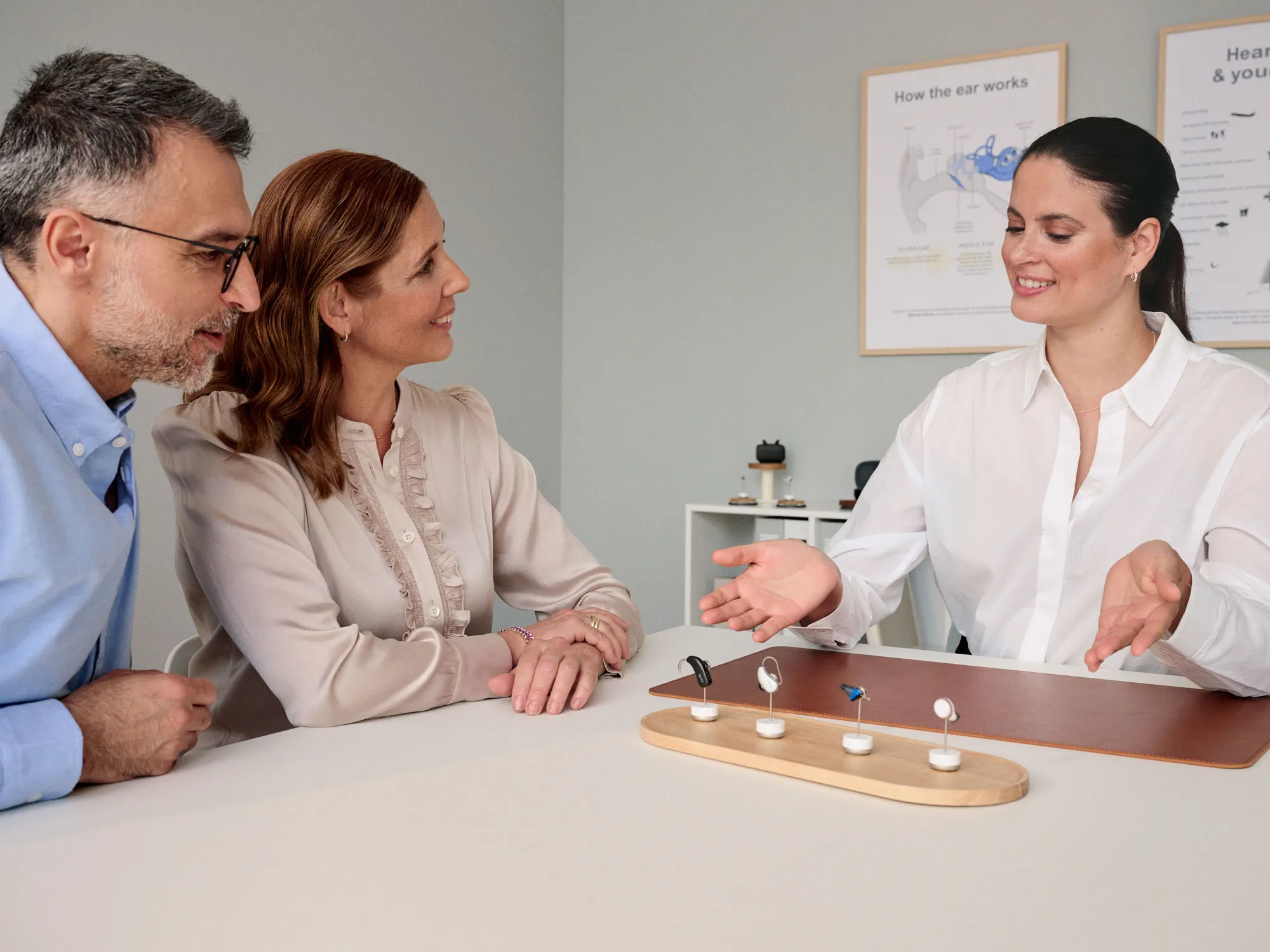
Consulting with a hearing care expert during a store visit, where a full hearing test and consultation are conducted, will help you identify suitable types based on your needs and preferences. From there, you can explore different brands and models to find the right fit within your budget with the desired features.


Don't miss a beat
Sign up to our newsletter for expert advice, the latest hearing aid technology, and exclusive offers delivered straight to your inbox.