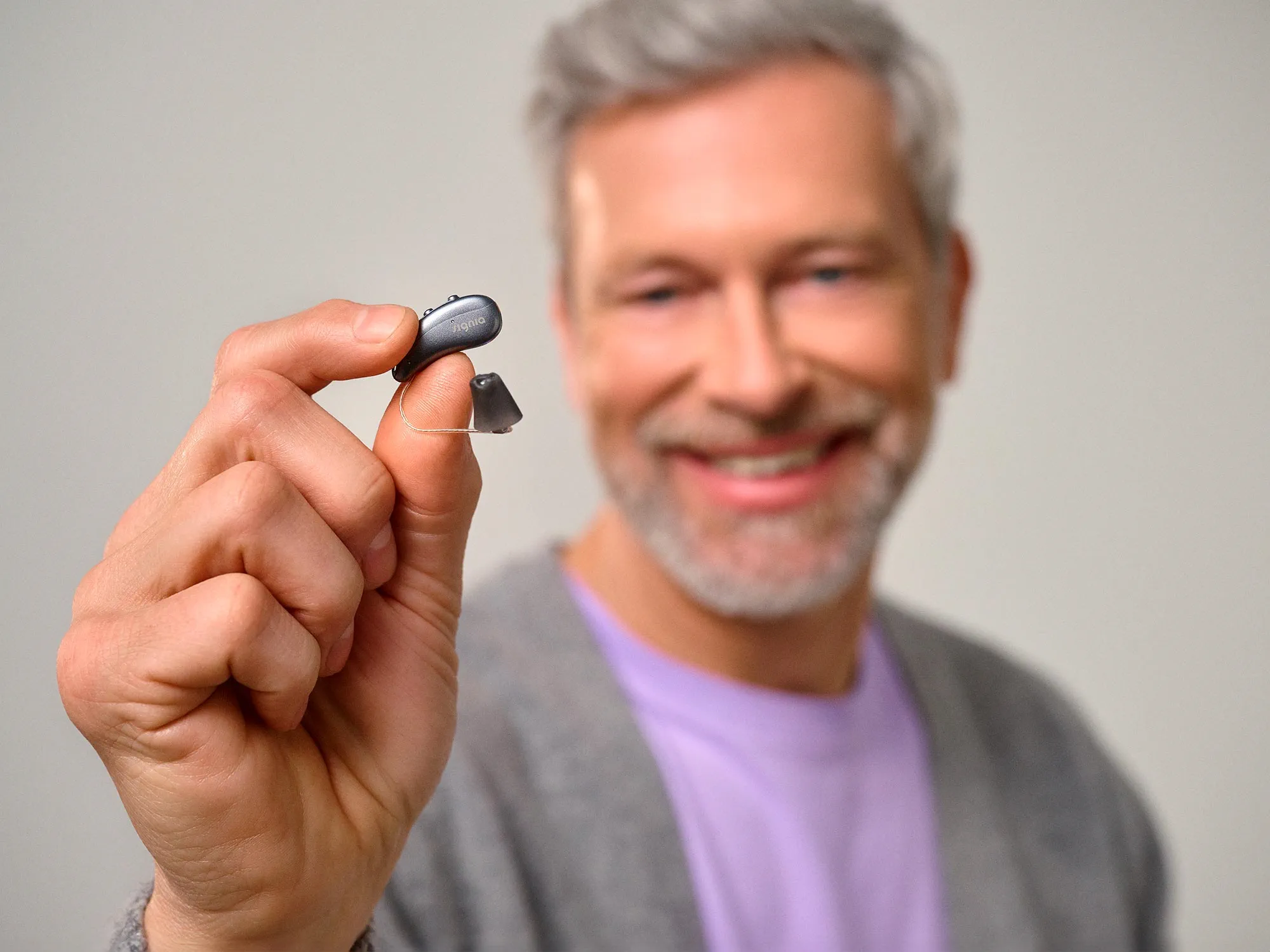
Hearing aid maintenance and cleaning tips for caregivers

Handling Hearing Aids With Care
When Does a Loved One Need Help Maintaining Hearing Aids?
Sometimes hearing aid maintenance can be tricky, especially for loved ones with reduced dexterity, such as those living with arthritis or other conditions. Your support can make all the difference, helping them stay independent and connected to what matters most.
According to The Hearing Review1, there are a range of factors unrelated to hearing that can influence how well a person can use their hearing aids. These include:

Cognition
Poor cognition can make it hard to follow a multi-step maintenance routine in the right order, or to work out what’s gone wrong when a hearing aid stops working as expected.
Memory/recall
Poor memory can mean daily or weekly care steps get forgotten entirely, or that instructions given at a fitting appointment are lost by the time they’re needed.
Manual dexterity
Poor dexterity can make it difficult to grip, twist or insert tiny components like batteries and domes, leading to dropped parts or incorrect fitting.
Tactile sensitivity
Poor sensitivity can make it hard to feel whether a battery or dome has clicked into place, so problems go unnoticed until the device stops working.
Health literacy and vision
Poor vision can make it difficult to read small print on packaging or instructions, or to understand what a warning beep or alert is telling them to do.
Maintaining Hearing Aids
3 Ways to Help a Loved One with Hearing Aid Maintenance and Cleaning
If someone you care about is facing these challenges, a little extra support can help them get the most from their hearing aids.
Here are three ways to make life easier for someone you love:

1. Attend an appointment together
Hearing care professional K. Durrheim says many families want to help but aren’t sure where to begin.
Going together to hearing appointments means your loved one gets emotional support, and you’ll both gain a better understanding of their communication needs. You’ll learn how to help in everyday situations, encourage follow-through with hearing care and support shared decision-making.

2. Watch online tutorials

3. Learn the basics

How Do I Clean Hearing Aids?

Clean daily
Hearing aids need a daily clean. At the end of each day, simply wipe hearing aids with a soft, dry cloth to remove any dirt and debris. A daily wipe keeps the outside clean, but the microphones and receivers need their own care too. Here's how to clean microphones and receivers properly.
Batteries
If batteries need replacing, make sure they’re inserted correctly and disposed of in the right way.
Troubleshooting Hearing Aids
What Happens When Hearing Aids Are Not Working?
What if There Is Still No Sound After Recharging the Hearing Aids?
When to Book an Appointment with an Audiologist

Sources:
1. The Hearing Review: Hearing Aid Outcomes and the Influence of Non-auditory Factors: https://hearingreview.com/resource-center/expert-insight/hearing-aid-outcomes-influence-non-auditory-factors